What the Building Remembers
Painting Where Chicago Still Echoes
The first thing that tells you a painter is alive isn’t the painting.
It’s the smell.
Open the door to my studio on a hot July afternoon and the odor of oil paint reaches you before anything else does. Linseed oil. Turpentine. Canvas. Dust warmed by the afternoon sun. Paint slowly curing on canvases leaning against the wall, some waiting weeks before they’re ready for another brushstroke, others waiting months. A few have stood there for more than a year because oil paint has its own ideas about time. Some colors seem to dry before you’ve had your morning coffee. Others sit there for weeks refusing to settle down. Sometimes you leave them alone. Sometimes you drag another stroke through the wet paint just to see what it was hiding. A painting might disappear for a month before it decides to show itself again.
People who don’t paint might call the place cluttered.
I call it evidence.
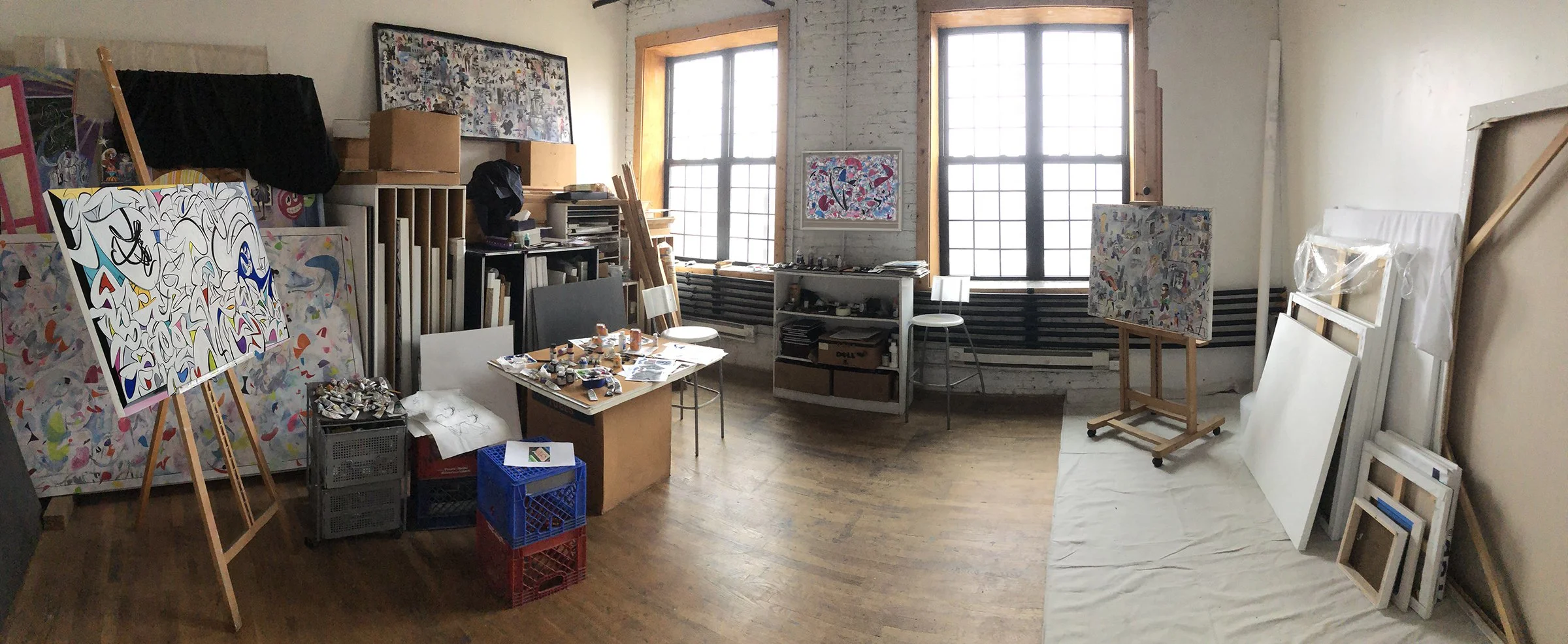
Inside my studio in the Feather Loft Building.
My studio sits inside Chicago’s Feather Loft Building, a stubborn old brick warehouse alongside the railroad tracks in Fulton Market. Long before the neighborhood became restaurants, tech companies, and million-dollar condos, it was where Chicago came to work. Fulton Market began in the middle of the nineteenth century as a bustling wholesale produce and livestock district centered around Haymarket Square before evolving into one of the city’s legendary meatpacking neighborhoods. The Feather Loft earned its name honestly. More than a century ago workers stood inside these walls plucking chickens by the thousands, sending feathers drifting through the building like dirty snow.
The neighborhood has forgotten most of that history, but the building hasn’t. A few months ago my landlord was repairing the old freight elevator outside my studio. He’s one of those people Chicago occasionally produces—a businessman who made one smart investment twenty-five years ago and now spends half the year chasing waves somewhere warm.He pried up one of the heavy steel floor plates beneath the elevator, and underneath lay a thick layer of black, rotted chicken feathers that had been trapped there for well over a century. Time had hidden them beneath the floorboards, waiting for somebody curious enough to look.
About ten years ago, once every summer, a family would quietly walk up to the building carrying a bouquet of bright flowers. They’d lean them against the brick wall near the tracks, stand there for a moment, then leave without saying a word. One of their sons had been shot there years earlier, caught up in the kind of life Chicago has always made room for. They came every year, faithful as church bells.
Then one summer they stopped coming.
Today, Google employees zip past that same stretch of sidewalk on motorized scooters, heading to and from work without giving the old building a second glance. Most have no idea they’re passing a place that once meant everything to somebody. Cities have a way of paving over memory without ever completely erasing it.
The trains pass all day, freight cars first, then Metra, rattling the windows and reminding everyone inside the building that the rest of the city is busy going somewhere. After a while you stop noticing them. Or maybe you paint with them. Their rhythm becomes part of the room, like the scrape of a palette knife across dried paint or the click of a brush against the rim of a paint can.
Next door another artist rents a studio. On weekends he cuts hair. Men sit waiting their turn in folding chairs while old basketball games play on a television I can hear through the wall. The announcers drift into my studio between the trains.... Sneakers squeak across hardwood floors somewhere beyond the plaster while I stand in front of a canvas wondering whether one line belongs where I’ve put it or whether it needs another week before I know the answer. It seems like an odd combination until you think about it.
A quiet studio would probably make me nervous anyway. Too much silence and you begin believing every doubtful thought that wanders through your head. A little noise keeps you honest.
Once a year, though, the building changes completely.
During our open studios the freight elevator becomes the heart of the place. A DJ loads his turntables and speakers onto the old elevator and rides it from floor to floor, spinning records as he climbs through all six stories. The doors slide open, music spills into the hallways, strangers wander into studios they’ve never seen before, and for one evening the old warehouse becomes a celebration of making things. Sometimes I wonder what the workers who plucked chickens here a century ago would think if they could step through those elevator doors now.
Chicago has always been my conversation partner. It talks in brick and fading signs, in graffiti layered over older graffiti, in rusted fire escapes that became balconies because somebody decided they should. Every surface carries evidence that another pair of hands arrived first.
I’ve always been interested in the first mark—it’s the beginning of a journey.
Children never ask permission to draw. Neither do the kids writing their names on viaducts at two in the morning. Somewhere later we learn hesitation. We start making work that already knows how it’s supposed to end.
People spend years looking for their style as though it’s hidden under a rock. Style is what remains after you’ve painted long enough that pretending becomes too exhausting. It arrives while you’re busy paying attention to something else.

Where the work happens. Inside my studio with a selection of my paintings, and the entrance to the Feather Loft Building in Chicago's Fulton Market neighborhood.
Every painter carries influences the way travelers carry old luggage—filled with admired paintings, remembered places, forgotten conversations, mistakes, victories, and disappointments. The work is arranging them until they sound like your own voice.
Some days that voice disappears. You stand in front of the same canvas for weeks wondering whether you’ve already painted everything you know. Then you soften one edge. Scrape away three days’ worth of work. Lay down a color you swore didn’t belong. Sometimes that’s enough. Sometimes it isn’t. Paintings die from too much attention as often as too little. The trick is leaving before you’ve explained away the mystery. The canvas finally exhales, and you realize it never wanted more paint. It only wanted you to stop interfering.
At the end of every day I clean my brushes.
Not quickly.
Meticulously.
They’re Series 7 Kolinsky sable brushes. Less tools than instruments. Tomorrow they’ll be asked to do something difficult again, and they deserve to begin the day clean.
Outside, the trains keep running. The flowers have disappeared. Google scooters replace mourners, warehouses become offices, and Fulton Market keeps reinventing itself. Yet inside these old brick walls, paintings still take as long as they need.
Tomorrow morning I’ll unlock the studio again. The smell of oil paint will be waiting behind the door, the basketball game next door will drift through the wall, and another train will rattle the windows of a building that has been standing here since chickens outnumbered office workers in Fulton Market. Somewhere in the room, one of those paintings will be waiting exactly where I left it, patient enough to let me think I’d discovered it.